The rustle of leaves in a remote rainforest, the dawn chorus of birds in an alpine meadow, or the rhythmic crash of waves on an undisturbed shoreline—these are not merely pleasant background noises. They represent intricate acoustic ecosystems that scientists now recognize as vital components of our planet's biodiversity. The emerging field of soundscape ecology has begun documenting how natural sound archives serve as both cultural heritage and ecological benchmarks in an increasingly noisy world.
Natural soundscapes function as auditory fingerprints of ecosystems. Unlike visual recordings or written descriptions, acoustic monitoring captures ephemeral interactions between species, atmospheric conditions, and geological processes. The guttural rumble of a calving glacier, for instance, contains precise data about ice density and fracture patterns that even advanced seismographs might miss. Similarly, the absence of certain frog calls in a wetland can signal pollution levels more accurately than water sampling in some cases. These sonic signatures form what researchers call "eco-acoustic metadata"—layered information that transcends simple species identification.
Biophony, the collective sound produced by organisms in a given habitat, operates on frequencies carefully allocated through evolutionary adaptation. Tropical entomologists have observed how rainforest insects partition ultrasonic bandwidths to avoid signal jamming, creating what amounts to an invisible acoustic architecture. This natural radio spectrum, refined over millennia, now faces disruption from human-made noise pollution that knows no biological rhythms or seasonal patterns. Conservationists working with hydrophones in marine environments report cases where ship traffic noise has compressed the communication range of whales by 90%, forcing them into acoustic exile from their traditional breeding grounds.
The cultural dimension of natural sound preservation often goes unrecognized. Indigenous communities from the Arctic to the Amazon maintain oral traditions intricately tied to specific soundmarks—acoustic landmarks that orient both physical navigation and spiritual practice. When the Dene people describe "the place where the wind sings through stone," they reference a sandstone canyon whose resonant properties have guided travelers and inspired ceremonies for generations. Such phenomena challenge Western notions of intangible heritage, revealing how sound archives preserve not just ecological data but human relationships with the more-than-human world.
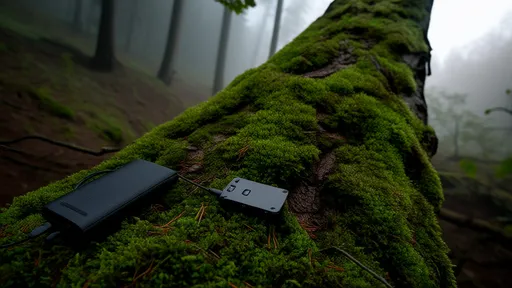
Technological advancements in audio capture have revolutionized soundscape documentation. Arrays of solar-powered recording units can now monitor locations continuously for years, generating petabytes of raw data. The real innovation lies in analysis techniques—machine learning algorithms that can isolate individual cricket chirps from a nocturnal chorus or detect the infrasound rumble of distant avalanches. These tools reveal patterns invisible to human ears: the synchronized flashing of fireflies correlates with ultrasonic frequencies in their wingbeats, while old-growth trees emit distinctive woodwave vibrations during sap flow cycles. Such discoveries position acoustic monitoring as a non-invasive alternative to traditional fieldwork that often disturbs the very ecosystems under study.
Climate change has introduced unexpected variables into soundscape preservation. Shifting migration patterns have altered avian vocalizations in ways that confuse established predator-prey relationships. Marine acousticians tracking coral reefs note that ocean acidification changes water's acoustic properties, potentially disrupting the navigational cues fish larvae use to find their birth reefs. Even seemingly subtle changes, like the dampening effect of microplastics on raindrop impacts at water surfaces, may have cascading effects through food chains. These findings position sound archives as critical baselines for measuring ecological disruption timelines with unprecedented precision.
Legal frameworks struggle to keep pace with soundscape conservation needs. While UNESCO's World Heritage Convention recognizes cultural soundscapes like Belgium's carillon tradition or Portugal's fado music districts, protections for natural sound environments remain patchwork. Some national parks have implemented "quiet zones," and the U.S. National Park Service's Natural Sounds Program sets important precedents. However, the ephemeral nature of sound—crossing borders effortlessly and leaving no physical trace—complicates jurisdictional enforcement. Cases like the prolonged legal battle over Navy sonar testing versus marine mammal protections highlight the tension between technological progress and acoustic ecology.
Grassroots initiatives demonstrate alternative approaches to sound preservation. Community bioacoustics projects from Ontario to Tasmania train citizens to collect local soundscapes using smartphone apps, creating decentralized archives that bypass institutional bottlenecks. In Sweden, acoustic ecologists collaborate with forestry companies to develop "sound logging" practices that preserve critical wildlife corridors based on vocalization patterns. Perhaps most innovatively, architects in Berlin have begun incorporating biophonic data into urban planning, designing green spaces that optimize native species' acoustic habitats rather than just visual aesthetics.
The ethical dimensions of soundscape conservation provoke challenging questions. Does recording an endangered species' call for posterity represent preservation or surrender? Should we prioritize saving the sounds of charismatic megafauna over less glamorous but ecologically crucial insects? How do we balance the acoustic rights of wildlife against human cultural practices like traditional hunting calls or religious bell-ringing? These dilemmas lack easy answers but underscore how sound archives force us to confront uncomfortable truths about our relationship with nature.
Emerging applications suggest unexpected utilities for preserved soundscapes. Medical researchers study how exposure to authentic forest recordings accelerates postoperative recovery compared to synthetic nature sounds. Agricultural engineers use historical pest sound data to develop acoustic deterrent systems that reduce pesticide reliance. Even the tech industry shows interest—voice recognition algorithms now incorporate bird dialect variations to improve regional accuracy. Perhaps most poetically, composers are creating "extinction requiems" by weaving together the last recorded calls of vanished species, giving audiences visceral encounters with loss no statistics can convey.
As the sixth mass extinction accelerates, natural sound archives may ultimately serve as acoustic arks—not merely records of what was, but blueprints for what could be again. The gong-like call of the critically endangered Borneo frog, the seismic stomp of a forest elephant herd, the wind-harp effect of Patagonian ice fields: these phenomena constitute Earth's living symphony. Their preservation demands technologies and methodologies, but fundamentally requires something simpler yet more profound—the willingness to listen, truly listen, to voices not our own.

By /Jul 7, 2025

By /Jul 7, 2025

By /Jul 7, 2025
By /Jul 7, 2025

By /Jul 7, 2025
By /Jul 7, 2025

By /Jul 7, 2025
By /Jul 7, 2025

By /Jul 7, 2025

By /Jul 7, 2025

By /Jul 7, 2025

By /Jul 7, 2025
By /Jul 7, 2025

By /Jul 7, 2025

By /Jul 7, 2025

By /Jul 7, 2025
By /Jul 7, 2025

By /Jul 7, 2025
