Ant Path Optimization Algorithm: Biological Wisdom in Logistics Networks

Jul 10, 2025 By

In the bustling world of logistics, where efficiency and speed dictate success, nature often provides the most elegant solutions. One such inspiration comes from the humble ant, whose collective behavior has given rise to groundbreaking optimization algorithms. These algorithms are now transforming how we approach complex logistics networks, offering a blend of biological wisdom and computational precision that challenges traditional methods.

The ant colony optimization (ACO) algorithm, first proposed in the early 1990s, mimics the foraging behavior of ants. When ants search for food, they deposit pheromones along their paths, creating trails that others follow. Over time, the shortest paths accumulate more pheromones, becoming the preferred routes. This simple yet powerful mechanism has been adapted to solve some of the most intricate logistics problems, from warehouse management to last-mile delivery.

What makes ant-inspired algorithms so effective in logistics? Unlike rigid, pre-programmed systems, these algorithms thrive on adaptability. Logistics networks are dynamic, with variables like traffic, weather, and demand constantly shifting. Ant-based systems excel in such environments, continuously updating and optimizing routes based on real-time data. This flexibility reduces delays, cuts costs, and improves overall efficiency.

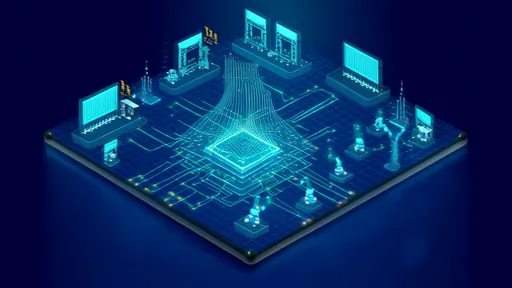
Consider a delivery network spanning a sprawling urban area. Traditional route-planning software might rely on static maps and fixed algorithms, often leading to suboptimal paths when unexpected disruptions occur. In contrast, an ant-inspired system treats each delivery vehicle as an "ant," leaving digital pheromones (data points) as they complete routes. The system then prioritizes paths that prove fastest or most reliable, adapting on the fly to congestion or road closures.

The real magic lies in the collective intelligence. No single ant possesses a master plan, yet the colony achieves remarkable efficiency through decentralized decision-making. Similarly, in logistics, individual vehicles or nodes don’t need overarching control—they contribute to a self-organizing system that evolves toward optimal performance. This decentralization is particularly valuable in large-scale operations where centralized control would be cumbersome or prone to bottlenecks.

Beyond route optimization, ant algorithms are making waves in warehouse management. In massive distribution centers, where picking routes can make or break productivity, these systems help design paths that minimize travel time for workers. By simulating ant behavior, the algorithm identifies patterns that humans or conventional software might overlook, such as the most efficient sequence to retrieve items for multiple orders simultaneously.

The environmental implications are equally compelling. Optimized routes mean fewer miles driven, which translates to lower fuel consumption and reduced emissions. Companies leveraging these algorithms report significant drops in their carbon footprints, proving that sustainability and profitability can go hand in hand. It’s a testament to how nature’s wisdom can address modern challenges.

Despite its advantages, implementing ant-inspired logistics isn’t without hurdles. The algorithms require robust data infrastructure to simulate pheromone trails and process real-time updates. There’s also the challenge of balancing exploration (testing new routes) with exploitation (using known efficient paths), much like ants must occasionally explore beyond established trails to discover better options. Too much exploration can lead to inefficiency, while too little risks stagnation.

Looking ahead, the fusion of ant algorithms with emerging technologies like IoT and 5G promises even greater breakthroughs. Imagine sensors on every vehicle and traffic light, feeding live data into a logistics network that adjusts routes instantaneously. Such a system would operate with the fluidity and resilience of an ant colony, effortlessly navigating the complexities of modern supply chains.

From ancient insect behavior to cutting-edge logistics, the journey of ant-inspired optimization is a striking example of biomimicry’s potential. As industries continue to embrace these algorithms, the line between biological wisdom and technological innovation blurs, paving the way for smarter, more sustainable networks. The ants, it seems, have been ahead of us all along.
Recommend Posts
Science

Remote Sensing of Asteroid Composition: Gamma-Ray Spectrometer for Spectral Prospecting

By /Jul 10, 2025

The remote sensing of asteroid composition has entered a revolutionary phase with the advancement of gamma-ray spectrometers, offering unprecedented opportunities for spectral prospecting. These instruments, capable of detecting elemental signatures from vast distances, are reshaping how scientists and mining corporations approach extraterrestrial resource identification. Unlike traditional optical spectroscopy, gamma-ray analysis penetrates surface layers, revealing the true mineralogical wealth hidden beneath regolith and weathered exteriors.
Science

Microbial Fuel Cells: Synchronous Electricity Generation in Wastewater Treatment

By /Jul 10, 2025

The intersection of wastewater treatment and renewable energy generation has long been a focal point for environmental engineers and sustainability experts. In recent years, a groundbreaking innovation has emerged from this convergence: microbial fuel cells (MFCs) that simultaneously treat sewage while generating electricity. This dual-purpose technology represents a paradigm shift in how we approach both waste management and clean energy production.
Science

Acoustic Metamaterial Lens: Focusing Sound Waves Beyond the Diffraction Limit

By /Jul 10, 2025

For decades, the diffraction limit has been a fundamental barrier in wave physics, dictating the smallest possible focal spot achievable with conventional lenses. While optical super-resolution techniques have made strides in breaking this limit for light waves, the acoustic world has lagged behind—until now. Recent breakthroughs in acoustic metamaterials are rewriting the rules of sound manipulation, enabling unprecedented control over acoustic waves at subwavelength scales.
Science

Cryo-Electron Microscopy Breakthrough: Atomic-Level Analysis of Protein Dynamic Deformation

By /Jul 10, 2025

The world of structural biology has witnessed a groundbreaking leap forward with recent advancements in cryo-electron microscopy (cryo-EM). For decades, scientists have struggled to capture proteins in their dynamic, ever-changing conformations at atomic resolution. This technological triumph now allows researchers to visualize proteins not as static snapshots, but as intricate molecular machines in motion, revealing secrets of their function that were previously locked away at scales smaller than a billionth of a meter.
Science

Ant Path Optimization Algorithm: Biological Wisdom in Logistics Networks

By /Jul 10, 2025

In the bustling world of logistics, where efficiency and speed dictate success, nature often provides the most elegant solutions. One such inspiration comes from the humble ant, whose collective behavior has given rise to groundbreaking optimization algorithms. These algorithms are now transforming how we approach complex logistics networks, offering a blend of biological wisdom and computational precision that challenges traditional methods.
Science

Atmospheric Water Generator: A Clean Energy Device Driven by Humidity Difference

By /Jul 10, 2025

In a world increasingly focused on sustainable energy solutions, researchers have turned their attention to an unexpected source of power: humidity. A groundbreaking device known as the atmospheric water generator is making waves in the clean energy sector by harnessing the natural difference in humidity between air masses to produce electricity. This innovative technology could revolutionize how we think about renewable energy, offering a continuous and eco-friendly power source that requires no fuel combustion or moving parts.
Science

Quantum Gravity Gradiometer: Non-destructive Underground Mapping of Archaeological Sites

By /Jul 10, 2025

For centuries, archaeologists have relied on traditional excavation methods to uncover the secrets buried beneath our feet. While these techniques have yielded remarkable discoveries, they often come at a cost—physical disruption to fragile sites and the irreversible destruction of contextual layers. Now, a groundbreaking technology borrowed from the frontiers of physics promises to revolutionize the field: the quantum gravity gradiometer.
Science

Coral Symbiodinium Transplantation: Engineering Algae Adaptation to Combat Coral Bleaching

By /Jul 10, 2025

The oceans are sending us a distress signal, written in the bleached skeletons of coral reefs. As marine heatwaves intensify due to climate change, the intricate symbiotic relationship between corals and their algal partners is breaking down at an unprecedented rate. Scientists are now racing against time to develop innovative solutions, with coral-algal symbiont transplantation emerging as one of the most promising frontiers in reef restoration.
Science

Spider Web Acoustic Sensors: Biomimetic Vibration Detection for Earthquake Early Warning

By /Jul 10, 2025

In a groundbreaking fusion of biology and technology, researchers have developed a revolutionary earthquake early-warning system inspired by the delicate sensory mechanisms of spiders. This biomimetic vibration detection technology, known as the cobweb-inspired acoustic sensor, represents a paradigm shift in how we monitor seismic activity, offering unprecedented sensitivity to the faintest tremors that precede major quakes.
Science

Helium-3 Extraction on the Moon: Lunar Regolith Smelting for Fusion Fuel

By /Jul 10, 2025

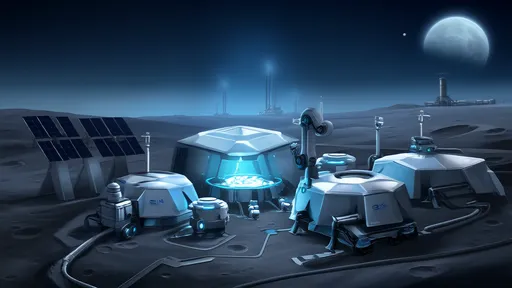
The dream of harnessing nuclear fusion as a near-limitless energy source has long tantalized scientists and policymakers alike. Among the many challenges in making this dream a reality, one of the most critical is securing a sufficient supply of viable fuel. While Earth’s resources are limited, the Moon offers a surprising solution: helium-3, a rare isotope that could revolutionize fusion energy. Recent advancements in lunar exploration and mining technologies have brought the concept of a helium-3 extraction facility on the Moon from science fiction to plausible reality.
Science

Agricultural Decision-Making Grand Model: Joint Simulation of Climate, Soil, and Crops

By /Jul 10, 2025

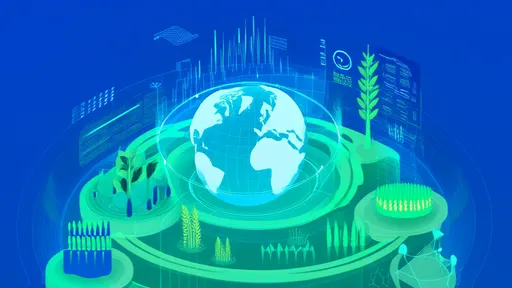
The agricultural sector stands at the precipice of a technological revolution, driven by the integration of advanced decision-making models that harmonize climate, soil, and crop variables. These sophisticated systems, often referred to as Climate-Soil-Crop Joint Inference Models, are reshaping how farmers, agronomists, and policymakers approach food production in an era of climate volatility. By synthesizing vast datasets and leveraging machine learning, these models offer unprecedented precision in predicting outcomes and optimizing agricultural practices.
Science

Scientific Literature Knowledge Engine: AI for Automatically Generating Research Hypotheses

By /Jul 10, 2025

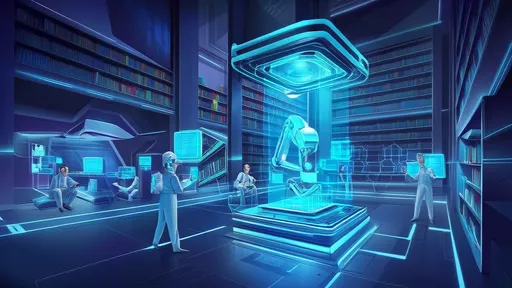
The scientific community stands at the precipice of a transformative era, where artificial intelligence is no longer just a tool for data analysis but an active participant in the research process. One of the most promising developments in this space is the emergence of AI systems capable of generating research hypotheses autonomously. These scientific literature knowledge engines are redefining how we approach discovery, offering a glimpse into a future where human intuition and machine intelligence work in tandem to push the boundaries of knowledge.
Science

Evolution of Federated Learning: Privacy-Preserving Training across Hospital Medical Data

By /Jul 10, 2025

The healthcare industry stands at the precipice of a data revolution, where artificial intelligence promises to unlock unprecedented insights from medical records. Yet this potential remains shackled by an immutable reality: patient data cannot - and should not - freely flow between institutions due to legitimate privacy concerns. Federal learning has emerged as the cryptographic key that may finally break this deadlock, enabling collaborative machine learning across hospitals without compromising sensitive information.
Science

Fluid Dynamics-Inspired Optimization for Data Center Cooling"

By /Jul 10, 2025

The intersection of physics-inspired artificial intelligence and data center cooling represents one of the most promising frontiers in sustainable computing. As global data consumption skyrockets, traditional cooling methods struggle to keep up with the heat generated by densely packed server racks. Enter fluid dynamics optimization—a field where AI, guided by the fundamental principles of fluid mechanics, is revolutionizing how we manage thermal loads in data centers.
Science

Circadian Rhythm Modulators: Molecular Targeted Therapy for Jet Lag Syndrome

By /Jul 10, 2025

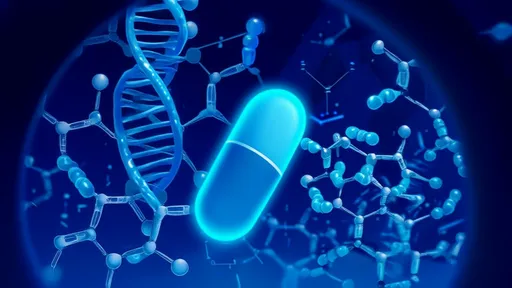
For frequent travelers and shift workers, jet lag remains an exhausting rite of passage—that groggy, disoriented feeling when your internal clock clashes with local time. While traditional remedies like melatonin supplements or light therapy offer partial relief, emerging research into circadian biology is uncovering precise molecular targets that could revolutionize how we treat circadian rhythm disruptions. The latest frontier? Chronopharmacology: timing drug administration to the body's internal rhythms while developing compounds that directly reset misaligned biological clocks.
Science

Neuromorphic Vision Sensor: Image Chip Mimicking the Energy Efficiency of the Human Eye

By /Jul 10, 2025

In the rapidly evolving field of artificial vision, neuromorphic vision sensors are emerging as a groundbreaking technology that mimics the efficiency and adaptability of the human eye. These bio-inspired image chips represent a significant departure from traditional camera systems, offering unparalleled energy efficiency and real-time processing capabilities. As industries from robotics to healthcare seek more intelligent and responsive visual systems, neuromorphic sensors are poised to revolutionize how machines perceive and interact with the world.
Science

RNA Memory Hypothesis: New Evidence for Molecular Carriers of Traumatic Inheritance

By /Jul 10, 2025

For decades, the idea that trauma could be inherited seemed like science fiction. Yet emerging research in epigenetics has gradually shifted this notion from the realm of speculation into the arena of serious scientific inquiry. The latest breakthrough comes from a provocative hypothesis: memory RNA may serve as a molecular carrier of inherited trauma. This discovery, if substantiated, could rewrite our understanding of how experiences—especially painful ones—echo across generations.
Science

Chloroplast Transplantation: Enabling Animal Cells to Perform Photosynthesis

By /Jul 10, 2025

In a groundbreaking leap for synthetic biology, scientists are exploring the possibility of enabling animal cells to harness sunlight for energy—just like plants. The concept, once relegated to science fiction, is now inching closer to reality through chloroplast transplantation. This revolutionary technique could redefine how we approach energy production, disease treatment, and even space exploration.