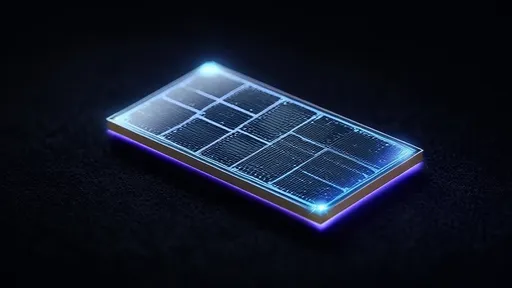
In the rapidly evolving field of artificial vision, neuromorphic vision sensors are emerging as a groundbreaking technology that mimics the efficiency and adaptability of the human eye. These bio-inspired image chips represent a significant departure from traditional camera systems, offering unparalleled energy efficiency and real-time processing capabilities. As industries from robotics to healthcare seek more intelligent and responsive visual systems, neuromorphic sensors are poised to revolutionize how machines perceive and interact with the world.
The human eye processes visual information with remarkable efficiency, using specialized neurons that only activate when detecting changes in light intensity. This event-driven approach eliminates the need for constant full-frame processing, drastically reducing power consumption. Neuromorphic vision sensors replicate this biological mechanism through asynchronous pixel circuits that independently respond to local brightness changes, transmitting data only when meaningful visual events occur. This paradigm shift from conventional frame-based imaging could reduce power consumption by orders of magnitude in applications requiring continuous visual monitoring.
Traditional CMOS image sensors face fundamental limitations in dynamic range and temporal resolution when compared to biological vision systems. Neuromorphic chips overcome these challenges by operating over a wide range of lighting conditions (140 dB compared to 60 dB for conventional sensors) while maintaining microsecond temporal precision. These characteristics make them particularly valuable for automotive applications, where they can reliably detect obstacles in both bright sunlight and dark tunnels without the motion blur that plagues standard cameras.
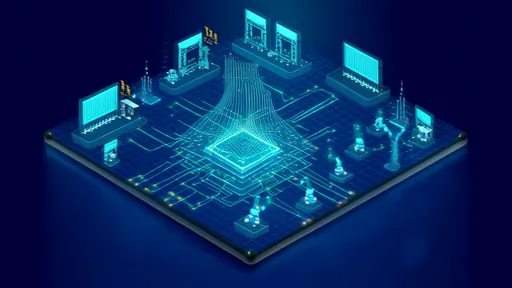
The architecture of neuromorphic vision sensors enables unprecedented computational efficiency by moving processing closer to the sensor itself. Rather than generating massive streams of redundant pixel data, these chips perform initial feature extraction at the hardware level, mimicking the retina's preprocessing capabilities. This in-sensor computing approach significantly reduces the bandwidth and processing power required for subsequent machine vision tasks, opening new possibilities for edge computing applications where power and computational resources are constrained.
Industrial automation stands to benefit tremendously from neuromorphic vision technology. The combination of high temporal resolution and low latency enables precise monitoring of fast-moving assembly lines, while the energy efficiency allows for widespread deployment of wireless vision sensors. Quality control systems using these sensors can detect manufacturing defects in real time with minimal computational overhead, potentially transforming production efficiency across multiple industries.
In the realm of mobile robotics, neuromorphic vision sensors offer solutions to critical challenges in navigation and object recognition. Their ability to process visual information with millisecond latency allows robots to react quickly to dynamic environments, while the reduced power requirements extend operational times for battery-powered systems. Researchers are particularly excited about the potential for these sensors to enable autonomous operation in resource-constrained environments where traditional vision systems would be impractical.
The healthcare sector presents another promising application area for neuromorphic vision technology. These sensors could enable new generations of medical imaging devices that combine high sensitivity with low power consumption, making them suitable for wearable health monitors and implantable devices. Their event-based operation might also facilitate real-time analysis of microscopic biological processes that occur too rapidly for conventional imaging systems to capture effectively.
Despite their considerable advantages, neuromorphic vision sensors face challenges in achieving widespread adoption. The unconventional data format they produce requires specialized algorithms and processing pipelines that differ significantly from those used with traditional image sensors. Developing tools and frameworks that allow engineers to work effectively with this new paradigm represents an ongoing area of research and development in the field.
Looking toward the future, the convergence of neuromorphic vision sensors with advanced neural network architectures promises to create visual processing systems that approach the efficiency and capability of biological vision. As fabrication techniques improve and more developers gain experience with event-based vision paradigms, we can expect to see these sensors proliferate across an expanding range of applications, potentially redefining the boundaries of what's possible in machine vision and artificial intelligence.
The development of neuromorphic vision technology reflects a broader trend in computing toward bio-inspired architectures that prioritize efficiency and specialized functionality over raw processing power. As these sensors continue to mature, they may well become the foundation for a new generation of intelligent systems that see and understand the world with human-like efficiency, transforming industries and enabling applications we can only begin to imagine.

By /Jul 10, 2025

By /Jul 10, 2025

By /Jul 10, 2025

By /Jul 10, 2025
By /Jul 10, 2025

By /Jul 10, 2025

By /Jul 10, 2025
By /Jul 10, 2025

By /Jul 10, 2025

By /Jul 10, 2025

By /Jul 10, 2025

By /Jul 10, 2025

By /Jul 10, 2025

By /Jul 10, 2025

By /Jul 10, 2025
By /Jul 10, 2025

By /Jul 10, 2025

By /Jul 10, 2025
